
Overview
A deviated septum occurs when the thin wall (nasal septum) between your nasal passages is displaced to one side. In many people, the nasal septum is off-center — or deviated — making one nasal passage smaller.
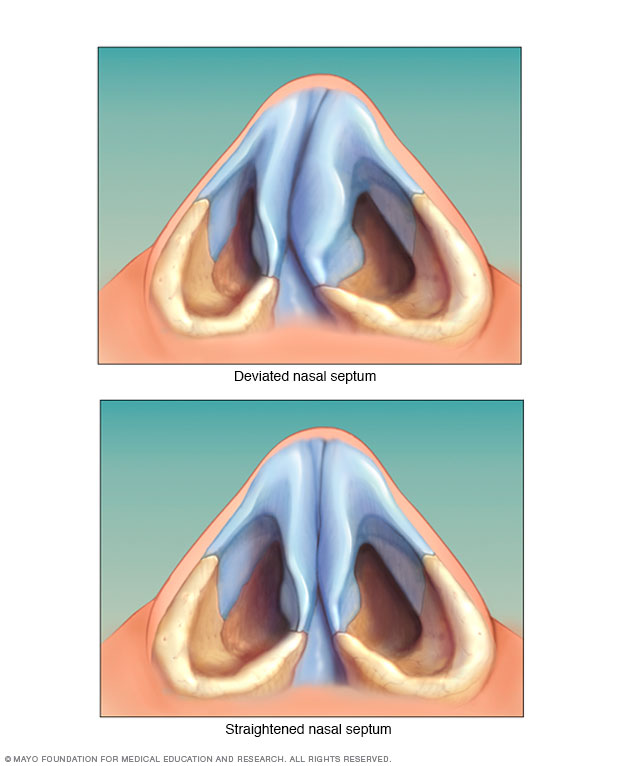
Deviated septum
A deviated septum occurs when your nasal septum is significantly displaced to one side, making one nasal air passage smaller than the other.
When a deviated septum is severe, it can block one side of the nose and reduce airflow, causing difficulty breathing. The exposure of a deviated septum to the drying effect of airflow through the nose may sometimes contribute to crusting or bleeding in certain people.
A nasal blockage or congestion (obstruction) can occur from a deviated nasal septum, from swelling of the tissues lining the nose or from both.
Treatment of nasal obstruction may include medications to reduce the swelling. To correct a deviated septum, you’ll need surgery.
Symptoms
Most septal displacements result in no symptoms, and you may not even know you have a deviated septum. Some septal deformities, however, may cause the following signs and symptoms:
- Obstruction of one or both nostrils. This blockage can make it difficult to breathe through the nostril or nostrils. You may notice this more when you have a cold or allergies that can cause your nasal passages to swell and narrow.
- Nosebleeds. The surface of your nasal septum may become dry, increasing your risk of nosebleeds.
- Facial pain. There is some debate about the possible nasal causes of facial pain. A possible cause of one-sided facial pain could be a severe deviated septum in which surfaces within the nose touch and cause pressure.
- Noisy breathing during sleep. A deviated septum or swelling of the tissues in your nose can be one of the many reasons for noisy breathing during sleep.
- Awareness of the nasal cycle. The nose alternates between being obstructed on one side and then changes to being obstructed on the other. This is called the nasal cycle. Being aware of the nasal cycle isn’t typical and can indicate nasal obstruction.
- Preference for sleeping on a particular side. Some people may prefer to sleep on a particular side to optimize breathing through the nose at night if one nasal passage is narrowed.
When to see a doctor
See your doctor if you experience:
- A blocked nostril (or nostrils) that doesn’t respond to treatment
- Frequent nosebleeds
- Recurring sinus infections
